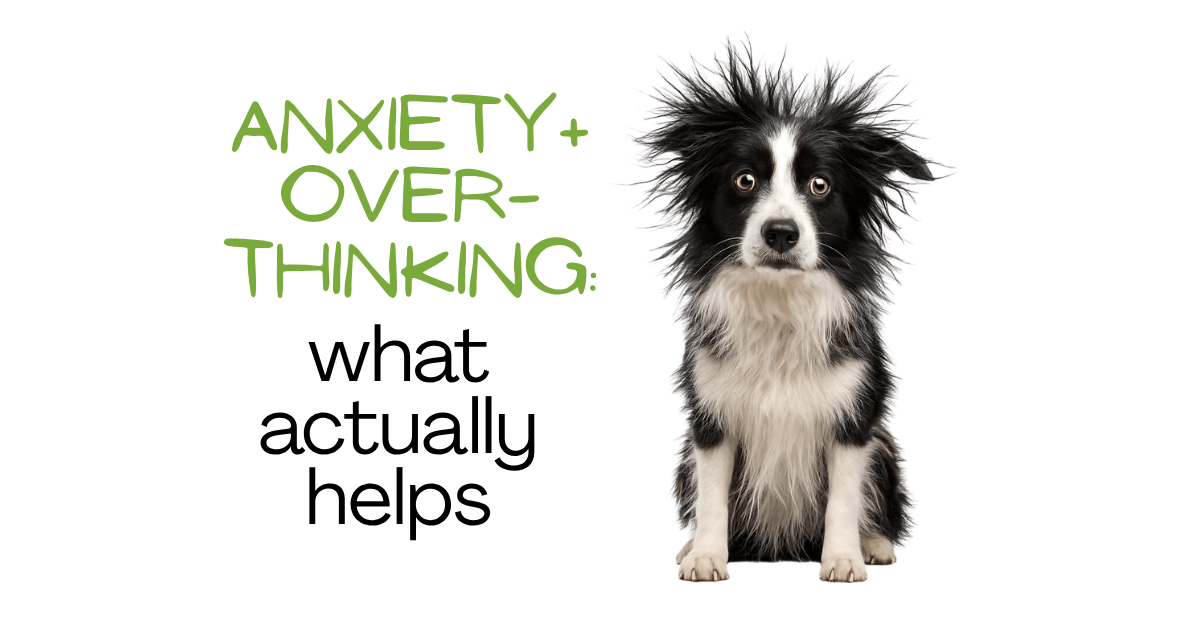
Anxiety can feel like your mind won’t slow down.
Thoughts loop. Your body stays tense. And even when things are “fine,” something doesn’t quite settle.
For some people, it shows up as constant overthinking. For others, it’s more physical — restlessness, tightness, difficulty relaxing. Often, it’s both.
Most people who end up here aren’t new to this. You may have already tried different ways to manage it — and sometimes they help… but it doesn’t fully go away.
Why Anxiety Can Feel So Persistent
Anxiety isn’t random.
At its core, it’s your system trying to anticipate, prepare, or protect you — often from something just outside of awareness.
Your brain is wired to look for uncertainty and fill in the gaps — usually with worst-case scenarios. That can be useful in certain situations. But over time, it can start to feel like your mind is always “on” — scanning, predicting, trying to stay one step ahead.
The result can look like:
- Overthinking that doesn’t land anywhere
- Second-guessing yourself after the fact
- Difficulty relaxing, even when nothing is wrong
What Actually Helps in the Moment
There are things that can help take the edge off when anxiety spikes:
- Slow your breathing (longer exhales)
- Feel your feet on the ground
- Name three things you can see
These kinds of strategies can help interrupt the cycle and bring you back into the present moment. They matter — and they can be genuinely useful.
Why Tools Don’t Always Solve It
If you’ve tried these approaches, you might have noticed: they help sometimes… but then the anxiety comes back.
That’s not because you’re doing anything wrong.
It’s usually because anxiety isn’t just a surface-level problem. It’s often connected to:
- Patterns your system has learned over time
- Ways your mind tries to stay ahead of uncertainty
- Things that haven’t fully had space to be processed
So while tools can help in the moment, they don’t always shift what’s driving the pattern.
A Different Way of Working With Anxiety
Instead of only trying to manage anxiety, it can help to start relating to it differently.
You might begin by gently noticing:
- When does it show up most?
- What tends to trigger it?
- What happens right before and right after?
Not to analyze everything — but to begin to see the pattern more clearly. Even small shifts in awareness can start to create more space.
If you’re curious about how to do this, my free course You Gotta Name It to Tame It walks through exactly this — five short lessons on understanding what’s happening inside you when anxiety shows up.
When Anxiety Starts to Take Over
If anxiety is:
- Showing up more often
- Affecting your relationships
- Making it hard to relax or feel present
- Keeping you in loops you can’t seem to get out of
…it may be a sign that something deeper is asking for attention. Not just to be managed — but understood.
Counselling for Anxiety in Squamish and Across BC
If you’re wanting to go beyond coping strategies and understand what’s underneath the anxiety, therapy can help.
I offer anxiety counselling in Squamish and online across BC — working with people who are tired of managing anxiety and ready to understand what’s driving it.
Jill Koehler, MA, RCC-ACS is a Registered Clinical Counsellor based in Squamish, BC, offering individual counselling for anxiety, trauma, and relationships in person and online across BC.